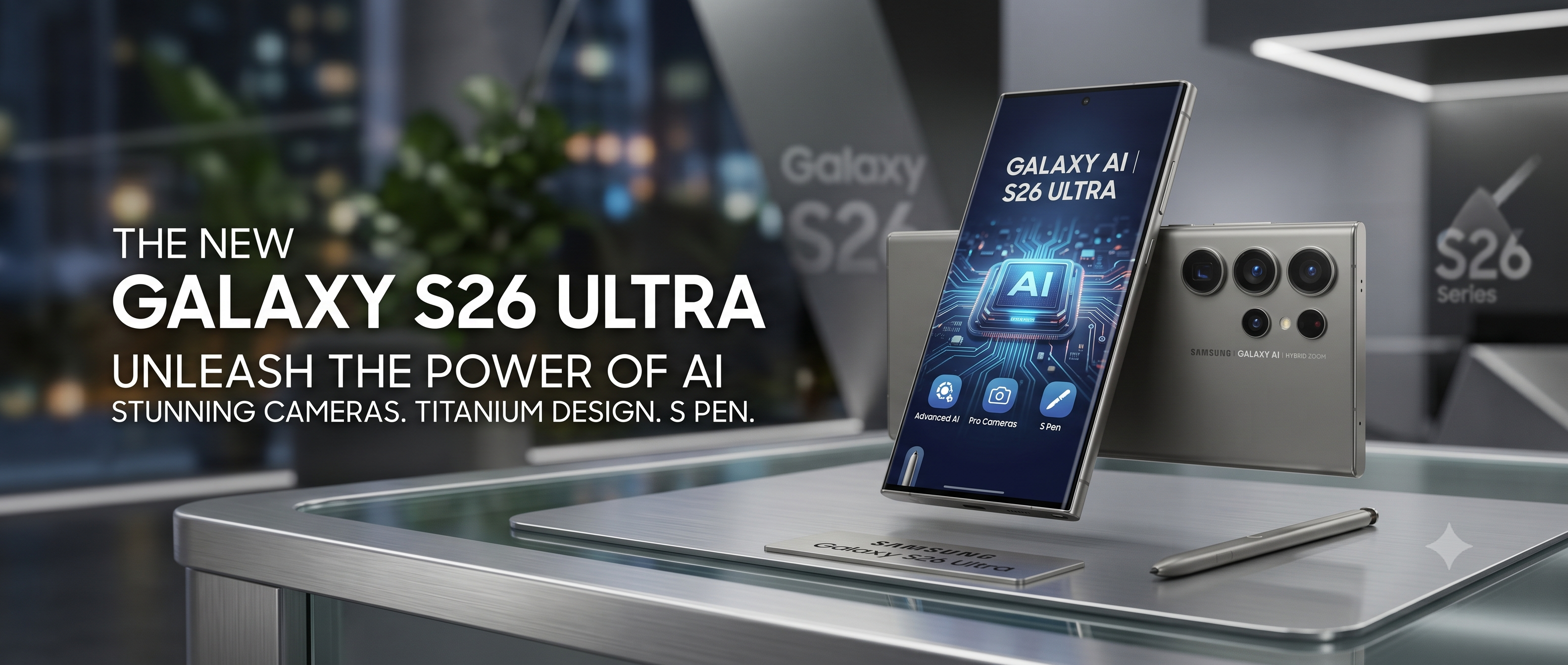
If you feel like smartphones hit a bit of a boring plateau over the last few years, you aren't alone. For a while, upgrades felt minor—a slightly faster chip here, an extra camera megapixel there. But 2026 has completely rewritten the script. We are officially moving past the era of the "app for everything" and entering the era of the AI Agent. Combine that with mature foldable designs and massive battery breakthroughs, and your pocket computer is about to feel very different. Here is your ultimate guide to the latest mobile landscape. ..... 1. The Rise of the True "AI Agent" Last year, smartphone AI was mostly about editing photos, translating text, and summarizing your notes. This year, Google, Apple, and Samsung have shifted from assistive AI to independent agents. Google Gemini & On-Device Processing: Running seamlessly on Android 16, your phone can now execute multi-step tasks across apps. You can tell your phone, "Find the flight receipt in my email, check my calendar, and book a ride for when I land," and it does it natively. Apple Intelligence Mature Era: Integrated deeply into iOS, Apple's local processing handles incredibly complex contextual tasks without sending your personal data to a server. Galaxy AI: Samsung has refined its ecosystem to turn its latest devices into hyper-personalized daily assistants that anticipate your routines before you even ask. 2. Hardware Heavyweights: The Best Phones of 2026If you are looking to upgrade right now, these are the flagship devices dominating the tech world:SmartphoneBest Known ForKey HighlightSamsung Galaxy S26 UltraAll-Round PerformanceUnmatched display brightness, premium titanium build, and peak performance.Google Pixel 10 Pro XLNext-Gen PhotographyPowered by a Tensor chip optimized specifically for local, zero-latency AI image generation.Xiaomi 17 & Vivo X300 FEBattery & Optics BeastsMassive silicon-carbon batteries (over 6,000mAh) paired with legendary Leica and Zeiss camera optics. 3. Mid-Range and Budget Beasts You don’t need to drop $1,000+ to get a fantastic mobile experience anymore. The mid-range market is incredibly competitive. The Sub-$400 Sweet Spot: Brands like Motorola (with the Edge series), Xiaomi's "T" line, and OnePlus are releasing phones with 120Hz refresh rate displays, IP69 environmental protection ratings, and massive batteries that easily hit 6,500mAh. 5G & Battery Dominance: In the budget segment, 5G is the absolute standard. Combined with highly efficient processors, these budget powerhouses are routinely pushing past two full days of battery life on a single charge. 4. Foldables Finally Go Mainstream Remember when foldables were thick, fragile bricks with obvious screen creases? Those days are gone. The latest clamshells and book-style folds—like the highly anticipated Motorola Razr 70 Ultra and Samsung Z Series—have thinned down the hardware to the point where they are barely thicker than a standard phone when closed. Software optimization has also caught up, allowing apps to split, resize, and scale seamlessly when you open or close the device. The Verdict: Should You Upgrade Now? Upgrade if: You are holding onto a phone from 2023 or earlier. The jump in battery efficiency (thanks to new high-density silicon batteries), AI capability, and display tech will feel night and day. Wait if: You bought a flagship phone late last year. Your hardware is still plenty powerful, and many of the latest software and AI updates are being back-ported to your device anyway. Are you planning to stick with your current brand, jump the fence to a new OS, or finally take the leap into foldable phones this year? Let us know in the comments below!.....